
The Science Behind Lanolin Oil: Why It’s the Best Kept Secret in Beard Care
Walk into any store that sells beard care products and you will see the same ingredients listed on nearly every bottle: jojoba oil, argan oil, sweet almond oil, coconut oil. These are fine ingredients with legitimate benefits. But they are also the same ingredients everyone else uses, which means that most beard oils on the market are essentially variations of the same formula with different labels and scents.
There is an ingredient that outperforms all of these for beard care applications, and most brands either do not know about it or choose not to use it. That ingredient is lanolin oil. At SickBeard, we have built our formulations around lanolin because the science is clear: when it comes to moisturizing, protecting, and conditioning facial hair and the skin beneath it, lanolin is in a class of its own.
In this article, we are going to dig into the science behind lanolin oil. What it is, where it comes from, what the research says about its benefits, and why it remains one of the most underutilized ingredients in men’s grooming.
What Is Lanolin Oil?
Lanolin is a natural wax-like substance secreted by the sebaceous glands of wool-bearing animals, primarily sheep. Its biological purpose is straightforward: protect the sheep’s wool and skin from harsh environmental conditions including rain, wind, extreme temperatures, and UV radiation. Lanolin coats each wool fiber, keeping it waterproof, flexible, and resistant to damage.
When wool is shorn and processed, the lanolin is extracted through a centrifugation process. The raw lanolin is then refined and purified for use in cosmetic, pharmaceutical, and industrial applications. Medical-grade and cosmetic-grade lanolin undergoes rigorous purification to remove impurities and pesticide residues, resulting in a safe, effective ingredient for topical use.
Lanolin’s Chemical Composition
What makes lanolin remarkable from a scientific standpoint is its chemical complexity. Lanolin is not a single compound. It is a complex mixture of esters, diesters, hydroxy esters, and fatty alcohols. Researchers have identified over 170 individual chemical components within lanolin, giving it a molecular profile that is unusually sophisticated for a natural substance.
This complexity is important because it means lanolin interacts with biological systems in ways that simpler oils cannot. The specific blend of long-chain fatty acids, cholesterol esters, and wax esters in lanolin creates a substance with unique physical and chemical properties that are directly relevant to hair and skin care.
Why Lanolin Is Exceptional for Beard Care: The Science
Understanding lanolin’s benefits requires looking at what the scientific literature tells us about how it interacts with both skin and hair. The evidence is substantial and comes from decades of dermatological research.
Molecular Similarity to Human Sebum
This is the single most important fact about lanolin: its molecular structure is remarkably similar to human sebum, the natural oil produced by your skin’s sebaceous glands. Sebum is your body’s built-in moisturizer. It waterproofs and protects your skin and hair, maintains the skin’s acid mantle, and supports the beneficial microbiome that lives on your skin surface.
Because lanolin’s chemical composition mirrors sebum so closely, your skin and hair recognize it as a familiar substance rather than a foreign one. This means lanolin integrates seamlessly with your body’s natural biology. It does not sit on the surface like many synthetic ingredients do. Instead, it blends with your existing oils and enhances their function.
For your beard, this translates to deeper, more effective moisturizing. Where a standard carrier oil might coat the outside of the hair shaft, lanolin can actually penetrate into the cuticle layer because your hair’s natural structure is designed to absorb sebum-like substances. The result is conditioning that works from the inside out, not just surface-level cosmetic improvement.
Superior Moisture Retention
One of the most well-documented properties of lanolin is its ability to absorb and retain moisture. Research has shown that lanolin can absorb up to 200 percent of its own weight in water. This is not just an interesting laboratory fact. It has direct practical implications for beard care.
When you apply a lanolin-based product to your beard, the lanolin absorbs moisture from the environment and from the water on your skin, then holds that moisture against your skin and hair throughout the day. This is fundamentally different from how most carrier oils work. Standard oils create a barrier that slows moisture loss, but they do not actively attract and hold water the way lanolin does.
The practical difference is significant. Most men who use standard beard oils notice that the effects wear off within a few hours. The beard feels soft after application but gradually returns to a dry, rough state by afternoon. With a lanolin-based formula like SickBeard Beard Oil ($14.99), the moisture retention lasts substantially longer because the lanolin is continuously working to maintain hydration.
Emollient and Occlusive Properties
In dermatological terms, effective moisturizers typically function through one or more of three mechanisms: they act as humectants (attracting water), emollients (softening and smoothing), or occlusives (creating a barrier to prevent moisture loss). Most beard care ingredients excel at one of these mechanisms.
Lanolin is one of the rare ingredients that functions effectively across all three categories. It attracts moisture like a humectant, softens the hair and skin like an emollient, and creates a breathable protective barrier like an occlusive. This triple-action mechanism is why lanolin is so effective as a standalone ingredient and why it enhances the performance of other ingredients in a formulation.
Skin Barrier Repair
The skin beneath your beard is under constant stress. It is covered by hair that traps heat and moisture, creating an environment where irritation, inflammation, and microbial overgrowth can easily take hold. At the same time, the beard hair wicks away natural oils, leaving the skin chronically under-moisturized.
Research in dermatological literature has consistently shown that lanolin supports and repairs the skin’s natural barrier function. The skin barrier, technically called the stratum corneum, is a thin layer of dead skin cells held together by a lipid matrix. When this barrier is compromised, the skin loses moisture rapidly, becomes vulnerable to irritants and pathogens, and develops the redness, flaking, and itching that bearded men know all too well.
Lanolin reinforces this lipid matrix because its chemical components are structurally compatible with the lipids naturally found in the stratum corneum. Applying lanolin is like providing your skin with the raw materials it needs to repair and maintain its own defenses. This is why lanolin-based products work so well on the dry, flaky skin that so many bearded men deal with.
Comfort for Dry, Tight Skin
Dry skin under a beard often feels tight and rough. Lanolin softens that skin and helps it hold moisture, so it feels more comfortable through the day. SickBeard makes cosmetics, not medicine. If you have redness, a rash or an itch that will not go away, see a doctor.
Why Most Beard Care Brands Skip Lanolin
If lanolin is such a superior ingredient, why is it absent from the vast majority of beard care products on the market? The answer comes down to three factors: cost, complexity, and marketing.
Cost
High-quality, cosmetic-grade lanolin is expensive. Significantly more expensive than the standard carrier oils that form the base of most beard products. Jojoba oil, argan oil, and sweet almond oil are all relatively affordable to source in bulk, especially at the quality levels used by mass-market brands. Lanolin, particularly the purified grade suitable for facial application, costs substantially more.
For brands focused on maximizing profit margins, the math is simple. They can make a product with cheap carrier oils, package it attractively, and sell it at a premium price. Including lanolin would either cut into their margins or force a price increase that many brands are unwilling to make.
Formulation Complexity
Lanolin does not behave like a simple carrier oil. Its complex chemical structure means it requires more sophisticated formulation techniques to incorporate properly into a beard oil product. You cannot simply add lanolin to a bottle of jojoba oil and call it a day. The ratios, the processing methods, and the complementary ingredients all need to be carefully calibrated to create a product where the lanolin performs optimally.
Most beard oil brands do not have the technical expertise or willingness to invest in this level of formulation science. It is far easier to mix a few standard oils together, add a fragrance, and put it on the shelf.
Marketing Myths
There is also a marketing dimension. The men’s grooming industry has heavily promoted certain trendy ingredients, particularly argan oil and jojoba oil, as premium beard care ingredients. These ingredients benefit from strong brand recognition and consumer demand. Lanolin, by contrast, does not have the same marketing buzz, despite being objectively superior in several key performance metrics.
Lanolin also has a reputation as an allergen, and that keeps some brands away from it. Here is what dermatologists say. Lanolin rarely causes allergies on healthy skin. People with eczema or other long-running skin problems, and people with broken skin, are more likely to react to it. In 2023 the American Contact Dermatitis Society named lanolin its Allergen of the Year. If you know you react to lanolin or wool alcohols, skip lanolin products, ours included. If your skin reacts easily, try a drop on your inner arm first and wait a day.
Why SickBeard Uses Lanolin
At SickBeard, we make product decisions based on science, not trends. When we formulated our Beard Oil, we evaluated hundreds of potential ingredients based on their documented efficacy for both hair conditioning and skin health. Lanolin consistently emerged as the standout performer.
We use high-quality, cosmetic-grade lanolin in our formulations because the evidence overwhelmingly supports its superiority for beard care applications. Yes, it costs more. Yes, it requires more careful formulation. But the results speak for themselves, and we believe our customers deserve products that are formulated for performance, not for profit margins.
Our Scientific Approach
Every SickBeard product is carefully formulated, not just mixed together in a kitchen. We research the mechanisms of each ingredient, understand how they interact with each other, and test our formulations to ensure they deliver real-world results. This is what sets us apart from the countless brands that are essentially selling scented oil in a dropper bottle.
Our products are made in Tigard, Oregon, under controlled conditions that ensure consistency and quality in every batch. We are a small company by design because we believe that quality control matters more than mass production.
Our Guarantee
We are confident enough in our formulations to back every product with a 30-day money-back guarantee. If our Beard Oil does not make a noticeable difference in how your beard looks and feels, we will refund your first purchase, even if the bottle is half empty. We can make this guarantee because lanolin-based products consistently outperform the alternatives, and the vast majority of our customers feel the difference from the first application.
How to Experience the Lanolin Difference
If you have been using standard beard oils and wondering why your beard still feels dry, itchy, or unmanageable, the answer may be simpler than you think. The product you are using might be doing the bare minimum because its core ingredients are only capable of the bare minimum.
Switching to a lanolin-based beard oil is the single most impactful change most men can make to their beard care routine. Here is how to get the most out of it.
Application Tips for Maximum Benefit
Apply to a slightly damp beard. Lanolin’s moisture-attracting properties work best when there is some water present for it to bind with. After washing your face, pat your beard until damp, not dry, and then apply the oil.
Massage into the skin first. Spend 30 seconds working the oil into the skin beneath your beard with your fingertips. This ensures the lanolin can begin repairing and reinforcing your skin barrier, which is where most beard problems originate.
Work through the hair from root to tip. After the skin is covered, distribute the remaining oil through your hair. Use a SickBeard Beard Comb ($12.99) to ensure even distribution.
Be consistent. The benefits of lanolin compound over time. While you will notice a difference from the first application, the most dramatic improvements in beard softness, skin health, and manageability come after two to four weeks of consistent daily use.
Pair With Complementary Products
While our Beard Oil is the cornerstone of any SickBeard routine, we have formulated complementary products that work synergistically with our lanolin-based oil.
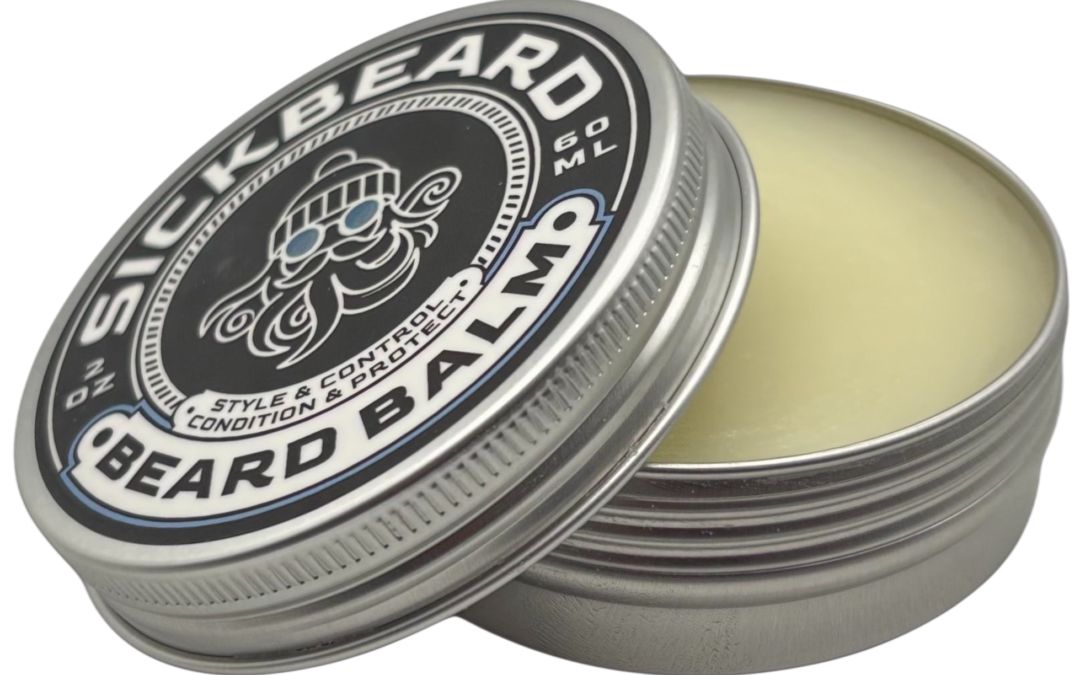
SickBeard Beard Balm ($17.99) adds hold and protection on top of the oil’s conditioning benefits. A beard conditioner provides deep conditioning during your shower routine.
The Bottom Line
Lanolin oil is not a new discovery. It has been used in skin care and wound healing for thousands of years. But in the beard care industry, it remains genuinely underutilized because most brands prioritize cost savings over product performance.
The science is unambiguous. Lanolin’s molecular similarity to human sebum, its exceptional moisture retention, its triple-action moisturizing mechanism, and its skin barrier repair capabilities make it the most effective natural ingredient available for beard care. It is not a gimmick or a marketing angle. It is basic biochemistry.
At SickBeard, we use lanolin because we follow the science. Our Beard Oil ($14.99) delivers results that standard formulations simply cannot match, and we stand behind that claim with a 30-day guarantee.
Visit the SickBeard shop to try our carefully formulated, lanolin-based beard care products. Once you feel the difference, you will understand why lanolin is the best kept secret in beard care, and why we think it is time the secret got out.