
Beard Dandruff: Causes, Prevention, and the Products That Actually Work
You have been growing your beard for weeks or maybe months. It is finally looking full and respectable. Then you glance down at your dark shirt and see it: a scattering of tiny white flakes across your collar and chest. Beard dandruff, commonly called beardruff, has arrived. And it does not care how impressive your facial hair looks if it is snowing every time you scratch your chin.
Beard dandruff is one of the most common and most frustrating grooming problems men face. It affects bearded men of every age, ethnicity, and beard length. Yet despite how widespread it is, most men have no idea what actually causes it, which means they have no idea how to fix it. They try washing more often, switching shampoos, or just aggressively scratching and hoping for the best. None of that works.
In this comprehensive guide, we are going to break down exactly what causes beard dandruff, why it keeps coming back, and which products and routines actually deal with it. If you have been battling flakes, itchiness, and embarrassment, this is the article you have been looking for.
What Is Beard Dandruff, Really?
Before we can fix the problem, we need to understand it. Beard dandruff is not just dry skin falling off your face, although that is part of the story. It is a condition where the skin beneath your facial hair becomes irritated, inflamed, or compromised, leading to visible flaking, itchiness, and sometimes redness.
The skin under your beard is fundamentally different from the skin on your cheeks or forehead. It is covered by coarse, dense hair that traps heat and moisture. It receives less airflow and less direct attention during your daily cleansing routine. And because facial hair wicks away the natural oils your skin produces, the skin beneath your beard is chronically under-moisturized compared to bare skin.
This creates the perfect environment for beardruff to develop. But the underlying cause can vary significantly from person to person, which is why a one-size-fits-all approach rarely works.
The Three Main Causes of Beard Dandruff
Cause 1: Dry Skin Beneath the Beard
This is the most common cause of beard dandruff and the one most men experience at some point during their beard journey. When you grow facial hair, the hair itself absorbs and redistributes the sebum, the natural oil your skin produces to keep itself moisturized. The longer and denser your beard becomes, the more sebum gets pulled away from the skin surface and distributed along the hair shaft.
The result is a moisture deficit at the skin level. Your face simply cannot produce enough natural oil to hydrate both the beard hair and the skin beneath it. Without adequate moisture, the skin becomes dry, tight, and irritated. Dead skin cells that would normally shed invisibly begin clumping together into the white flakes you see on your shirt.
Dry skin beardruff tends to get worse in cold weather, low humidity environments, and after hot showers that strip away natural oils. Men who wash their beards with regular soap or harsh shampoo are especially prone to this type because those products remove what little moisture the skin has left.
Key signs of dry skin beardruff: Fine, white, powdery flakes. Skin feels tight or itchy, especially after washing. Flaking tends to be worse in winter months or dry climates.
Cause 2: Fungal Overgrowth (Seborrheic Dermatitis)
Here is where things get more clinical. Your skin naturally hosts a yeast called Malassezia. In normal amounts, this fungus is harmless. But when conditions are right, typically warm, moist, oily environments, Malassezia can multiply rapidly. The warm, humid microclimate beneath a beard is essentially a luxury resort for this yeast.
When Malassezia feeds on your skin’s natural oils, it produces oleic acid as a byproduct. Many people’s skin reacts to oleic acid with inflammation, redness, and accelerated skin cell turnover. Instead of shedding gradually over the normal 28-day cycle, skin cells are pushed to the surface in as few as seven to ten days. These immature cells clump together and flake off in larger, more noticeable pieces.
This condition is medically known as seborrheic dermatitis, and it is the same process that causes regular scalp dandruff. It is more persistent than simple dry skin and often requires targeted treatment to bring under control.
Key signs of fungal beardruff: Larger, yellowish or waxy flakes. Skin may appear red or inflamed. Itching can be intense. Flaking persists regardless of season or humidity. May also be present on the scalp, eyebrows, or sides of the nose.
Cause 3: Product Buildup and Residue
This cause surprises many men, but it is more common than you might think. Every product you apply to your beard, whether it is beard oil, balm, wax, or even regular face wash, leaves behind some residue. Over time, these residues accumulate on the skin surface and along the hair follicles. They mix with dead skin cells, sweat, and environmental debris to form a layer of buildup that clogs pores and suffocates the skin.
Product buildup creates a vicious cycle. The clogged pores and irritated skin produce more flakes, so you apply more product to combat the dryness, which creates more buildup, which causes more flaking. Men who use heavy waxes, petroleum-based products, or silicone-laden conditioners are particularly susceptible.
The quality of the products you use matters enormously here. Cheap beard oils filled with synthetic ingredients and artificial fragrances are far more likely to cause buildup than carefully formulated products made with natural, skin-compatible ingredients.
Key signs of product buildup beardruff: Flakes may appear waxy or sticky rather than dry. Beard feels heavy or coated even after washing. Skin feels congested. Problem started or worsened after introducing a new product.
Dry Flakes and Dandruff Need Different Care
Fine, white flakes on skin that feels tight after washing usually come from dry skin. Moisturizing every day is the answer for dry skin, and that is the job a beard oil does.
Flakes that come with an itchy rash, scaly skin or greasy patches can be dandruff, which doctors call seborrheic dermatitis. A beard oil does not treat dandruff. The American Academy of Dermatology suggests washing your beard and scalp at least once a week with a dandruff shampoo, such as one with zinc pyrithione, ketoconazole or selenium sulfide. If the rash does not go away, or you get breakouts, pain or broken skin under your beard, see a dermatologist.
Either way, dermatologists suggest moisturizing your skin and beard right after you wash. For normal to dry skin, they suggest beard oil.
How Beard Oil Helps Dry, Flaky Skin
For flakes that come from dry skin, the best daily habit is a properly formulated beard oil used consistently. But the key word there is properly formulated. Not all beard oils are created equal, and the ingredient that makes the biggest difference is one that most brands ignore entirely.
The Lanolin Advantage for Dry Skin
Lanolin oil is the closest thing nature has produced to human sebum. Derived from sheep’s wool, lanolin is a complex mixture of esters, fatty acids, and alcohols that mirrors the composition of the oils your own skin produces. This molecular similarity is not a marketing talking point. It is the reason lanolin works where other oils fall short.
When you apply a lanolin-based beard oil to your skin, two useful things happen. First, the lanolin softens dry skin. Second, it forms a light barrier that slows the moisture your skin loses to the air, so the skin stays moisturized longer and is less likely to dry out and flake.
Most competing beard oils rely exclusively on plant-based carrier oils like jojoba, argan, or coconut oil. While these oils have their merits, they lack the structural complexity of lanolin. Jojoba oil, often touted as the closest plant equivalent to sebum, is actually a liquid wax ester with a much simpler molecular profile. It provides surface-level moisture but cannot replicate the deep, sustained hydration that lanolin delivers.
This is exactly why SickBeard made lanolin oil the cornerstone of our beard care formulations. Our Beard Oil ($14.99) is carefully formulated to deliver lanolin’s benefits in a lightweight, fast-absorbing formula that works with your skin rather than against it.
Building a Complete Routine for Dry, Flaky Skin
While beard oil is the foundation, a few other steps and products help keep the skin under your beard from drying out.
A Simple Routine for Dry, Flaky Skin
Step 1: Cleanse Properly (But Not Too Often)
Wash your beard two to three times per week with a gentle, beard-specific cleanser. Daily washing strips away too much natural oil and disrupts the skin’s moisture barrier. When you do wash, use lukewarm water rather than hot, which further dehydrates the skin. Gently massage the cleanser into the skin beneath your beard, not just the hair. This helps lift dead skin cells and product residue without aggressive scrubbing.
Step 2: Condition Deep
After washing, apply a quality beard conditioner to replenish the moisture that cleansing removes. Leave it on for two to three minutes before rinsing to allow the conditioning agents to fully penetrate.
Step 3: Apply Beard Oil to Damp Skin
This step is where most men see the biggest improvement. After washing or showering, pat your beard until it is damp but not dripping. Then apply your beard oil immediately, while the skin is still warm and the pores are open. Work the oil into the skin first using your fingertips, then distribute it through the hair.
When your skin is dry and flaking, apply SickBeard Beard Oil ($14.99) twice daily, once in the morning and once before bed. The lanolin in our formula forms a moisture barrier that keeps the skin hydrated while you sleep. Once your skin feels comfortable again, you can go back to once a day.
Step 4: Comb and Exfoliate
Regular combing does more than keep your beard tidy. A quality beard comb gently lifts dead skin cells away from the surface and distributes oil evenly throughout the beard. This prevents the uneven moisture distribution that contributes to patchy dryness and flaking.
The SickBeard Beard Comb ($12.99) and Knuckle Beard Comb ($12.99) are designed with smooth, rounded teeth that glide through facial hair without scratching or irritating the sensitive skin beneath. Use your comb after applying beard oil to ensure thorough distribution. Comb downward and outward from the chin, working through the entire beard systematically.
Step 5: Lock in Moisture with Balm
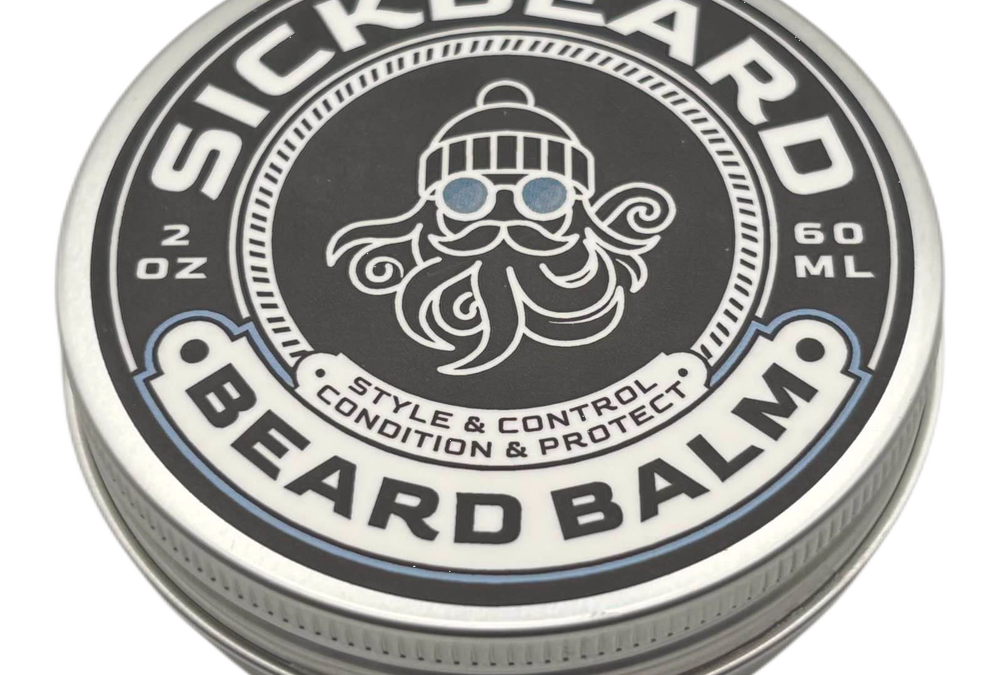
For men with stubborn dry skin or those living in harsh, dry climates, adding a beard balm after oil provides an extra layer of protection. The SickBeard Beard Balm ($17.99) contains additional conditioning agents that seal in the moisture delivered by the oil. Think of it as the topcoat that protects the base layer. Apply a small amount after your oil has absorbed, working it through the beard with your fingers or comb.
Lifestyle Factors That Make Beardruff Worse
Products are only part of the equation. Several lifestyle factors can contribute to beard dandruff, and addressing them alongside your grooming routine will produce faster, more lasting results.
Hydration
Your skin’s moisture starts from within. Chronic dehydration leads to drier skin across your entire body, and the already moisture-deprived skin under your beard suffers first. Aim for at least eight glasses of water per day, more if you exercise heavily or live in a dry climate.
Diet
Foods rich in omega-3 fatty acids, such as salmon, walnuts, and flaxseed, support healthy skin barrier function from the inside out. Zinc, found in oysters, beef, and pumpkin seeds, plays a critical role in skin cell turnover and immune function. A diet lacking these nutrients can contribute to chronic skin dryness and increased susceptibility to fungal issues.
Stress
Chronic stress triggers cortisol production, which impairs skin barrier function and increases inflammation. Men under significant stress often notice their beardruff worsening, even if their grooming routine has not changed. Managing stress through exercise, sleep, and other recovery practices has a measurable positive impact on skin health.
Hot Showers
A long, scorching shower might feel great in the moment, but hot water is one of the fastest ways to strip your skin of its natural oils. For your beard specifically, try turning the temperature down to lukewarm during the last minute of your shower. Your skin will retain significantly more moisture, and you will notice less post-shower tightness and flaking.
Sleeping Environment
Heated indoor air during winter months can drop humidity levels below 20 percent, far below the 40 to 60 percent range that is optimal for skin health. Running a humidifier in your bedroom can make a dramatic difference in how your beard skin feels by morning.
When to See a Dermatologist
Flaking from plain dry skin usually gets better with regular moisturizing and the habits described above. However, some cases warrant professional attention. Consider seeing a dermatologist if you experience any of the following:
Persistent redness or swelling that does not improve with two to three weeks of consistent moisturizing. Painful or oozing patches beneath your beard, which could indicate a bacterial infection. Severe itching that disrupts your sleep or daily activities. Flaking that spreads to your eyebrows, ears, or scalp despite treatment. No improvement after four to six weeks of a consistent routine.
A dermatologist can determine whether your beardruff is driven by seborrheic dermatitis, contact dermatitis from a specific ingredient, psoriasis, or another condition that may require prescription treatment.
What to Look For in a Beard Oil for Dry Skin
After everything we have covered, here is what to look for. A good beard oil for dry skin has a few traits.
They contain lanolin or other rich moisturizers that help dry skin hold its moisture. They are free of harsh sulfates and come in an unscented version for sensitive skin. They are carefully formulated rather than assembled from whatever oils were cheapest that month. And they are backed by a guarantee because the company stands behind their effectiveness.
SickBeard checks every one of those boxes. Our complete product line is formulated right here in Oregon with premium ingredients chosen with care. We include lanolin oil as our hero ingredient because people have used it on dry skin for generations. And we back everything with a 30-day money-back guarantee.
Comfortable Skin Under Your Beard Starts Today
Dry, flaky skin under a beard is not something you have to live with. Moisturize the skin under your beard every day, and see a dermatologist if the flakes come with a rash.
Do not ignore dry, flaky skin and hope it goes away on its own.
Begin with SickBeard Beard Oil as your foundation, build a routine with our complete line of carefully formulated products, and give your beard skin the care it has been missing. Softer, more comfortable skin is a few drops away. Visit the SickBeard shop to get started.